


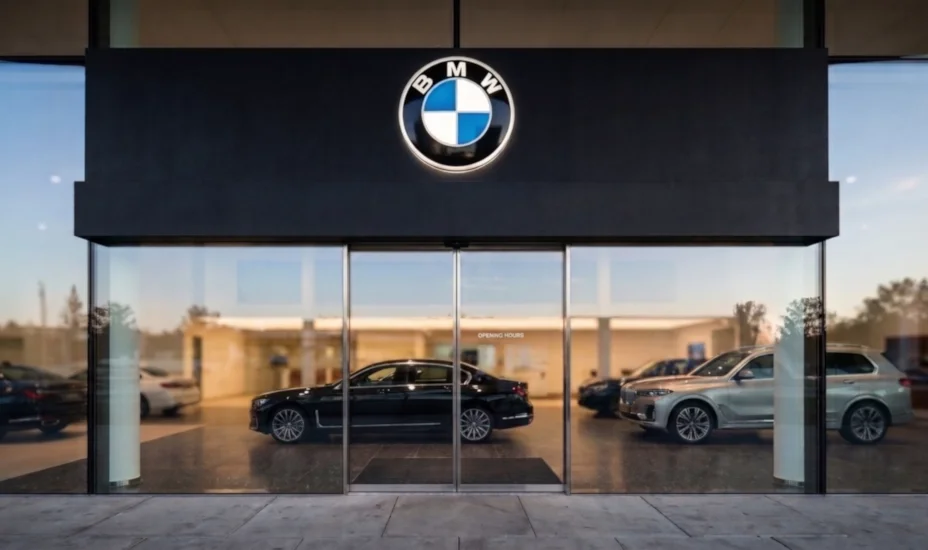
The German Brand That Turned Engineering into an Art
Few automotive brands have built a reputation as powerful as BMW. For decades, the famous blue-and-white badge has represented precision engineering, premium craftsmanship, and an unmistakable driving experience. Whether it’s a sporty sedan on the Autobahn, a luxury SUV navigating city streets, or an electric vehicle embracing the future of mobility, BMW has consistently positioned itself as a brand that combines performance with innovation.
Its well-known slogan, “The Ultimate Driving Machine,” is more than clever marketing—it reflects a philosophy that has shaped the company for over a century.
Today, BMW is one of the world’s most respected luxury automobile manufacturers, selling millions of vehicles across more than 140 countries. Yet many people are surprised to learn that the company didn’t begin by building cars at all.
Its story started in Germany’s aviation industry during one of the most turbulent periods in European history.
Before BMW Built Cars, It Built Aircraft Engines
BMW’s roots can be traced to 1916, when two German aircraft engine manufacturers merged their expertise during the First World War.
The company that eventually became Bayerische Motoren Werke AG (BMW) officially adopted its current name in 1917, focusing on the design and production of aircraft engines known for their reliability and engineering excellence.
In its earliest years, BMW had little connection to the automotive industry. Its reputation was built on aviation technology, where precision, durability, and innovation were essential.
However, history soon forced the company to reinvent itself.
Following the end of World War I, the Treaty of Versailles prohibited Germany from manufacturing aircraft engines. Like many industrial businesses of the time, BMW suddenly found itself unable to continue producing its core product.
Rather than accepting defeat, the company adapted.
BMW diversified into industrial engines, agricultural equipment, and motorcycles—an important step that would eventually lead to its transformation into an automotive manufacturer.
This ability to evolve during difficult circumstances would become one of BMW’s defining strengths throughout its history.
 Reinvention Through Innovation
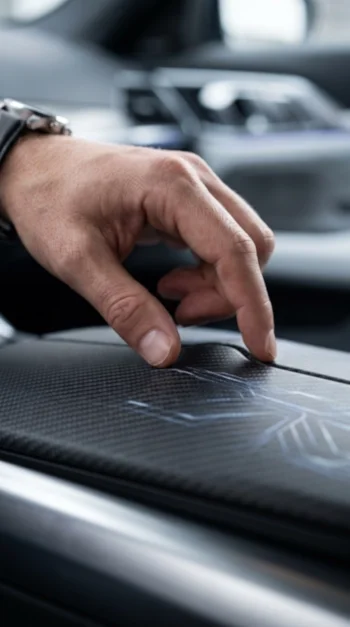 Reinvention Through Innovation
Many companies struggle when their original business model becomes obsolete. BMW responded differently. Instead of viewing restrictions as the end of its story, the company treated them as the beginning of a new chapter.
In 1923, BMW introduced its first motorcycle, the BMW R 32, featuring the now-famous horizontally opposed “boxer” engine. Designed by engineer Max Friz, the motorcycle quickly gained attention for its innovative engineering and exceptional reliability.
The success of the R 32 demonstrated that BMW’s engineering expertise could extend far beyond aviation. It also established a principle that continues to define the brand today:
Engineering excellence comes before everything else.
The Journey into Automobile Manufacturing
BMW entered the automobile industry in 1928 after acquiring Fahrzeugfabrik Eisenach, a German vehicle manufacturer.
This acquisition enabled BMW to begin producing passenger cars while expanding its engineering capabilities beyond motorcycles.
The company’s first automobile, the BMW 3/15, was introduced shortly afterward. Although modest compared with today’s luxury models, it marked the beginning of one of the automotive industry’s most remarkable success stories.
Throughout the 1930s, BMW introduced increasingly advanced vehicles that emphasized performance, elegant design, and engineering precision.
Among the most influential early models was the BMW 328, launched in 1936.
Widely regarded as one of the finest sports cars of its era, the BMW 328 achieved numerous motorsport victories and established BMW’s reputation as a company capable of building vehicles that combined speed with exceptional handling.
Even today, historians often cite the BMW 328 as one of the cars that defined the company’s sporting identity.
A Brand Rebuilt After War
Like much of Germany’s industrial sector, BMW faced enormous challenges following the Second World War.
Many production facilities had been damaged, manufacturing was heavily restricted, and rebuilding the business required years of investment and determination. During this difficult period, BMW once again demonstrated remarkable resilience.
The company returned to producing motorcycles before gradually re-entering the automobile market with compact cars and luxury sedans.
Although financial difficulties continued throughout the 1950s, BMW’s leadership remained committed to producing premium vehicles rather than competing solely on price. That decision would ultimately define the company’s future.
The Turning Point That Changed Everything
BMW’s modern success can largely be traced to one groundbreaking product line.
In the early 1960s, the company introduced its “Neue Klasse” (New Class) sedans.
These vehicles combined sporty performance, modern styling, practical design, and engineering sophistication at a time when the European automotive market was rapidly changing.
The Neue Klasse wasn’t simply another successful model.
It completely transformed BMW’s identity.
For the first time, the company became widely recognized as a manufacturer of premium sports sedans designed for drivers who valued both luxury and performance.
Many automotive historians consider the Neue Klasse the foundation upon which today’s BMW brand was built.
Without its success, BMW might never have become the global automotive leader it is today.
More Than Cars—Building a Premium Lifestyle Brand
As BMW expanded internationally during the second half of the twentieth century, it became clear that the company wasn’t just selling automobiles.
It was selling an experience.
Every aspect of the business—from vehicle design and dealership architecture to customer service and brand communication—was carefully developed to reinforce BMW’s premium positioning.
The company invested heavily in research and development, introducing innovations in engine technology, safety systems, driving dynamics, and manufacturing processes.
This relentless focus on engineering excellence helped BMW compete successfully against other German luxury manufacturers while attracting customers seeking both performance and prestige.
Rather than chasing short-term trends, BMW concentrated on building long-term trust through consistent product quality and continuous innovation.
That philosophy continues to shape the brand today.
Why BMW Became “The Ultimate Driving Machine”
Throughout its history, BMW has pursued one objective with remarkable consistency: building vehicles that are as rewarding to drive as they are to own.
While many manufacturers focused primarily on comfort or affordability, BMW invested heavily in engineering that enhanced performance, balance, and driver engagement. Engineers paid close attention to weight distribution, suspension tuning, steering precision, and power delivery, creating cars that felt connected to the road.
This philosophy eventually inspired one of the most recognizable slogans in automotive history—“The Ultimate Driving Machine.” More than an advertising campaign, it reflected the company’s belief that every vehicle should deliver an enjoyable driving experience.
That commitment helped BMW establish a distinctive identity in the premium automotive market, appealing to customers who wanted more than transportation—they wanted a car that inspired confidence every time they got behind the wheel.
The Models That Defined BMW’s Success
Few automotive brands have produced as many iconic vehicles as BMW. Over the decades, several models have shaped the company’s reputation and strengthened its position as a global luxury manufacturer.
BMW 3 Series
Introduced in 1975, the BMW 3 Series became the benchmark for compact executive cars. Combining performance, comfort, practicality, and premium quality, it remains one of BMW’s best-selling vehicles and has attracted generations of loyal customers.
BMW 5 Series
The 5 Series expanded BMW’s appeal among business professionals seeking executive comfort without sacrificing driving dynamics. It successfully blended luxury, advanced technology, and everyday usability.
BMW 7 Series
As BMW’s flagship luxury sedan, the 7 Series showcased the company’s latest innovations in comfort, safety, and engineering. Many technologies that later appeared in other BMW models were first introduced in this range.
BMW X Series
Recognizing the growing popularity of SUVs, BMW launched the X Series. Vehicles such as the X3, X5, and X7 allowed the company to compete successfully in one of the fastest-growing automotive segments while maintaining its performance-focused identity.
BMW M Division
For enthusiasts, the BMW M badge represents the highest level of engineering. Originally established to support BMW’s motorsport activities, M vehicles combine race-inspired technology with everyday practicality, becoming some of the world’s most admired high-performance automobiles.
Growing from Germany to More Than 140 Markets
BMW’s international expansion has been carefully planned rather than driven by rapid growth alone.
Today, the company manufactures vehicles in several countries while serving customers across Europe, North America, Asia, the Middle East, Africa, and Australia. This global manufacturing network helps BMW remain competitive while responding efficiently to regional market demand. Its major production facilities include Germany, the United States, China, South Africa, the United Kingdom, and other strategic locations. BMW also operates one of the world’s largest premium dealership networks, providing customers with consistent sales and after-sales experiences.
This international presence has transformed BMW from a respected German manufacturer into one of the world’s leading luxury automotive brands.
Driving the Future with Electric Mobility
The automotive industry is experiencing its biggest transformation since the invention of the automobile itself.
Governments are introducing stricter emissions standards, customers are demanding cleaner transportation, and rapid advances in battery technology are reshaping vehicle development.
BMW recognized these changes early.
The company launched the BMW i sub-brand to explore sustainable mobility solutions, introducing vehicles such as the BMW i3 and BMW i8, which demonstrated new approaches to electric mobility and lightweight vehicle construction.
Today, BMW continues expanding its portfolio of fully electric models, including the i4, i5, i7, and iX, while investing in next-generation battery technology, software, and digital services. At the same time, it maintains a technology-neutral approach by continuing to improve highly efficient combustion engines and plug-in hybrids where appropriate for different markets.
Rather than replacing its traditional strengths, BMW is using innovation to extend them into a new era of mobility.
Sustainability Beyond the Vehicle
Modern luxury is no longer measured solely by performance or craftsmanship. Increasingly, it is also judged by environmental responsibility.
BMW has integrated sustainability across its business operations, from manufacturing and supply chain management to vehicle design and recycling initiatives. The company has invested in renewable energy at production facilities, increased the use of recycled materials in vehicle manufacturing, and set ambitious targets for reducing carbon emissions throughout the lifecycle of its products. According to BMW Group’s sustainability reporting, these initiatives are part of its long-term strategy to support climate protection while maintaining premium quality and innovation.
These efforts reflect a broader shift within the automotive industry, where manufacturers are expected to balance performance with responsible resource management.
Challenges That Tested BMW’s Resilience
BMW’s journey has not been without obstacles.
Like every global automaker, the company has faced economic recessions, changing consumer preferences, supply chain disruptions, semiconductor shortages, and increasing competition from both traditional manufacturers and emerging electric vehicle companies.
The transition toward electrification has created additional challenges, requiring significant investment in research, manufacturing, and digital technologies.
Yet BMW has consistently demonstrated an ability to adapt without abandoning its core identity. Rather than reacting to every market trend, the company has focused on long-term innovation while preserving the engineering principles that built its reputation.
Five Business Lessons Every Entrepreneur Can Learn from BMW
BMW’s success offers valuable lessons that extend far beyond the automotive industry.
First, build your reputation on quality rather than price. BMW has consistently competed through engineering excellence instead of trying to become the cheapest option.
Second, innovation should be continuous. From aircraft engines to electric vehicles, BMW has repeatedly embraced technological change while staying true to its core values.
Third, protect your brand identity. Customers immediately associate BMW with driving performance and premium quality because the company has maintained a consistent message for decades.
Fourth, invest for the long term. Many of BMW’s most successful innovations required years of research before reaching customers.
Finally, adapt without losing your identity. Whether producing motorcycles, luxury sedans, SUVs, or electric vehicles, BMW has evolved while remaining recognizable as the same brand.
Frequently Asked Questions
1. What does BMW stand for?
BMW stands for Bayerische Motoren Werke AG, which translates to Bavarian Motor Works in English.
2. When was BMW founded?
BMW traces its origins to 1916, and the company officially adopted the name Bayerische Motoren Werke AG in 1917.
3. Did BMW always manufacture cars?
No. BMW originally produced aircraft engines before expanding into motorcycles and later automobiles.
4. What is BMW famous for?
BMW is internationally recognized for premium automobiles, engineering excellence, driving performance, and luxury vehicle innovation.
5. What are BMW’s most popular models?
Some of BMW’s best-known models include the 3 Series, 5 Series, 7 Series, X Series SUVs, and high-performance BMW M vehicles.
6. Is BMW investing in electric vehicles?
Yes. BMW continues expanding its electric vehicle portfolio through the BMW i range while investing in battery technology, software, and sustainable mobility solutions.
7. Where are BMW vehicles manufactured?
BMW operates production facilities in several countries, including Germany, the United States, China, South Africa, the United Kingdom, and other international locations.
8. Why is BMW called “The Ultimate Driving Machine”?
The slogan reflects BMW’s long-standing focus on delivering vehicles that combine precision engineering, balanced handling, performance, and an engaging driving experience.
