


The Fashion Brand That Changed the Rules of Retail
Walk through almost any major shopping district in the world—from Madrid and London to Dubai, Tokyo, or New York—and you’ll probably find a Zara store attracting a steady stream of shoppers. New collections appear almost every week, store displays constantly change, and customers know that if they like something today, it may be gone tomorrow.
That sense of urgency wasn’t created by accident. It is the result of one of the most innovative retail strategies ever developed.
Today, Zara is recognized as one of the world’s leading fashion retailers, but its story began with a single storefront in the Spanish city of A Coruña. Founded in 1975 by Amancio Ortega, Zara grew from a local clothing shop into the flagship brand of Inditex, one of the world’s largest fashion groups. What makes this journey remarkable is that Zara didn’t simply build a successful clothing business—it fundamentally changed how the fashion industry operates.
Instead of producing large collections months before they reached stores, Zara developed a system that could respond quickly to customer demand, introduce new designs in weeks rather than seasons, and keep shoppers returning regularly to discover what’s new.
This is the story of how a Spanish retailer reshaped global fashion through speed, innovation, and an unwavering focus on the customer.
Where the Zara Story Began
Long before Zara became a global name, Amancio Ortega was learning the clothing business from the ground up.
Growing up in modest circumstances in northwestern Spain, Ortega left school early and began working in garment retail. Rather than dreaming of luxury fashion houses, he focused on understanding how clothes were designed, manufactured, and sold. Every job taught him something valuable—from how customers made purchasing decisions to how production delays increased costs.
During the 1960s, Ortega and his then-wife Rosalía Mera started producing clothing through a small manufacturing business called Confecciones GOA. Instead of opening a retail chain immediately, they supplied garments to other businesses, giving them practical experience in manufacturing, quality control, and customer preferences.
That manufacturing experience would later become Zara’s greatest competitive advantage.
A Small Store That Changed Global Fashion
On 9 May 1975, Ortega opened his first clothing store on Juan Flórez Street in A Coruña, Spain. Few people could have imagined that this modest shop would become the starting point of one of the world’s largest fashion empires.
Interestingly, the business almost had a different name.
Historical accounts explain that Ortega originally intended to call the store “Zorba,” inspired by the famous film Zorba the Greek. However, after discovering that another nearby business had already registered the name, the letters were rearranged to create “Zara.” It was a simple change that would eventually become one of the most recognizable names in global retail.
Unlike luxury boutiques that targeted wealthy customers, Zara followed a different philosophy from day one. The store offered fashionable clothing inspired by current trends while keeping prices within reach of ordinary consumers.
This combination of attractive design and affordable pricing quickly attracted shoppers.
Word spread rapidly, sales increased, and Zara began expanding across Spain.
The Entrepreneur Who Refused to Follow Industry Rules
Many fashion companies in the 1970s followed a predictable pattern.
Designers created collections months in advance, manufacturers produced large quantities, retailers stocked stores, and customers waited for the next fashion season.
Amancio Ortega questioned that entire process.
Instead of asking, “What will people wear next year?” he asked a much simpler question:
“What do customers want right now?”
That single shift in thinking transformed Zara’s future.
Rather than relying on long forecasting cycles, Ortega believed stores should constantly communicate with designers and production teams. Customer preferences shouldn’t take months to reach headquarters—they should influence new products almost immediately.
This philosophy eventually became one of Zara’s defining strengths.
Even today, customer feedback continues to play an important role in how collections evolve throughout the year.
 Building a Different Kind of Fashion Business
 Building a Different Kind of Fashion Business
As Zara expanded across Spain during the late 1970s and early 1980s, the company invested heavily in something many competitors overlooked—its operational system.
Most retailers separated design, manufacturing, logistics, and retail into different organizations spread across multiple countries.
Zara chose a different path.
Instead of outsourcing every stage of production, it maintained significant control over design, manufacturing, distribution, and retail operations. This vertically integrated model allowed teams to communicate faster, respond quickly to demand, and reduce unnecessary delays.
The benefits soon became obvious.
If customers preferred a particular colour, fabric, or style, Zara could often adjust future production far more quickly than traditional competitors.
That flexibility gradually became one of the company’s greatest business advantages and laid the foundation for what would later become known as fast fashion.
From a Spanish Retailer to an International Brand
Success within Spain encouraged Zara to think beyond its domestic market.
The company’s first international expansion came in 1988, when it opened a store in Porto, Portugal. It was a logical first step—geographically close, culturally familiar, and an opportunity to test whether Zara’s retail model could succeed outside Spain.
The results were encouraging.
Within a few years, Zara entered larger international markets including the United States and France, followed by rapid expansion across Europe, Asia, the Middle East, and Latin America.
What made this expansion remarkable wasn’t simply the number of stores.
It was the consistency of the customer experience.
Whether someone visited a Zara location in Barcelona, Dubai, Singapore, or London, they encountered the same modern store design, regularly updated collections, and carefully curated shopping environment.
Instead of becoming “just another international retailer,” Zara created a global identity while remaining flexible enough to understand local consumer preferences.
Why Zara Can Bring New Fashion to Stores in Just Weeks
Walk into a Zara store today, and there’s a good chance you’ll see products that weren’t even in the design stage a month earlier. That speed is no coincidence—it’s the result of a business model that many competitors have tried to replicate but few have matched.
Unlike traditional fashion brands that often design collections six to twelve months in advance, Zara works with a much shorter product development cycle. Designers, buyers, production teams, and store managers operate as closely connected units, allowing customer feedback to influence new collections almost in real time.
This agile approach also helps Zara reduce excess inventory. Instead of producing huge quantities of every design, the company manufactures smaller batches and replenishes only those products that perform well. For customers, this creates a sense of exclusivity. If they like an item, they know waiting too long could mean missing the opportunity to buy it.
More importantly, this strategy keeps stores feeling fresh. Frequent product updates encourage customers to visit regularly, knowing there is always something new to discover.
More Than Fashion: Zara’s Customer Experience
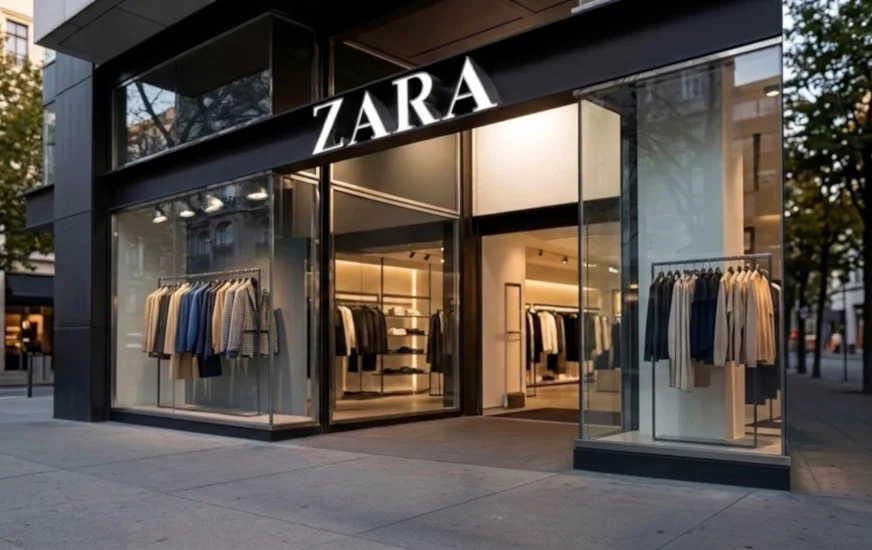
One of Zara’s greatest strengths is that it sells more than clothing—it delivers an experience. Its stores are intentionally designed with clean layouts, modern interiors, and carefully curated product displays that allow the collections to remain the focus. Whether customers shop in Madrid, Dubai, Singapore, or New York, the overall experience feels familiar while still reflecting local preferences.
The same philosophy extends to Zara’s digital platforms. Customers can browse collections online, check product availability at nearby stores, place orders through mobile devices, and choose home delivery or in-store collection. This seamless integration of physical and digital shopping has become a defining feature of Zara’s retail strategy.
Instead of treating online and offline channels as separate businesses, Zara views them as part of a single customer journey—a strategy that has become increasingly important as consumer shopping habits continue to evolve.
Competition Never Stopped Zara from Innovating
Success inevitably attracts competition. Over the years, Zara has faced strong rivals from global brands including H&M, Uniqlo, Mango, Primark, and countless online retailers. More recently, digital-first companies have intensified competition by introducing even faster production cycles and highly targeted online marketing.
Rather than abandoning its core strengths, Zara has continued investing in technology, logistics, and customer experience. Its ability to combine physical stores with digital commerce remains a significant competitive advantage, especially in markets where customers value both online convenience and in-store shopping.
The company has also invested heavily in data-driven decision-making, allowing it to respond more effectively to changing consumer preferences than many traditional retailers.
Can Fast Fashion Become More Sustainable?
As Zara expanded globally, expectations surrounding environmental responsibility also changed. Consumers increasingly want clothing that is not only fashionable but also produced more responsibly. Like many major apparel companies, Zara and its parent company, Inditex, have introduced sustainability initiatives aimed at reducing the environmental impact of their operations.
Through its Join Life program and broader sustainability strategy, Inditex has committed to increasing the use of lower-impact textile fibres, improving water efficiency across its supply chain, reducing greenhouse gas emissions, and expanding circularity initiatives such as Zara Pre-Owned in selected markets. According to the company’s 2025 sustainability reporting, 88% of the textile fibres used across Inditex brands were lower-impact fibres, and the company continues working toward its 2030 environmental targets.
At the same time, Zara continues to face scrutiny because of the broader environmental challenges associated with fast fashion. Industry experts regularly debate issues such as clothing consumption, product longevity, and textile waste.
The company’s ongoing challenge is balancing customer demand for frequent new collections with growing expectations for sustainability and responsible production.
Challenges Along the Journey
Every global company faces obstacles, and Zara is no exception. Rapid international expansion brought increasing complexity to its supply chain. Global disruptions, changing consumer behavior, rising logistics costs, and geopolitical events have all required the company to adapt its operations.
The fast-fashion business model has also been the subject of public debate regarding sustainability, labor practices across the wider apparel industry, and overconsumption. While Zara has introduced initiatives to address many of these concerns, the company continues to operate in an industry under close public and regulatory scrutiny.
Responding to these challenges requires constant innovation—not only in fashion design but also in manufacturing, logistics, and environmental responsibility.
Looking Ahead: What’s Next for Zara?
The next chapter of Zara’s story will likely be shaped by technology as much as fashion. Artificial intelligence is already helping retailers forecast demand, improve inventory management, and personalize customer experiences. Digital design tools, smarter logistics, and advanced analytics are expected to play an even greater role in Zara’s operations over the coming years.
At the same time, sustainability will remain central to the company’s long-term strategy. Inditex has outlined ambitious goals for reducing emissions, increasing the use of lower-impact materials, and moving toward greater circularity across its brands. Achieving these targets will be essential as consumers, investors, and regulators place greater emphasis on environmental performance.
As fashion continues to evolve, Zara’s ability to combine speed, innovation, and responsible business practices will determine whether it can maintain its leadership position for decades to come.
Five Business Lessons Every Entrepreneur Can Learn from Zara
Zara’s success offers valuable insights for businesses in every industry.
- Stay close to your customers. Listening to customer feedback can be more valuable than relying solely on long-term predictions.
- Speed creates competitive advantage. Reducing unnecessary delays helps businesses respond quickly to changing markets.
- Control what matters most. Zara’s integrated approach to design, production, and distribution gives it greater flexibility than many competitors.
- Innovation should be continuous. Successful companies improve their systems every year rather than waiting for major disruptions.
- Build a strong brand through experience. Consistent product quality, attractive stores, and seamless digital services create long-term customer loyalty.
These principles apply far beyond fashion and help explain why Zara is frequently studied in business schools around the world.
Frequently Asked Questions
1. Who founded Zara?
Zara was founded by Amancio Ortega and Rosalía Mera in 1975 in A Coruña, Spain.
2. What is Zara famous for?
Zara is best known for pioneering the fast-fashion retail model, rapidly introducing new collections based on changing customer demand.
3. Is Zara owned by Inditex?
Yes. Zara is the flagship brand of Inditex (Industria de Diseño Textil), one of the world’s largest fashion retail groups.
4. Why is Zara considered successful?
Its success comes from an integrated supply chain, rapid product development, strong customer focus, and a globally recognized retail experience.
5. What products does Zara sell?
Zara offers clothing, footwear, accessories, fragrances, and lifestyle products for women, men, and children.
6. How does Zara support sustainability?
Through Inditex, Zara is working to reduce emissions, increase the use of lower-impact fibres, improve water efficiency, and expand circularity initiatives such as Zara Pre-Owned.
7. How many countries does Zara operate in?
Zara serves customers through physical stores and online platforms across numerous markets worldwide, making it one of the most internationally recognized fashion retailers.
8. What can businesses learn from Zara?
Businesses can learn the importance of customer-centric innovation, agile operations, supply chain efficiency, continuous improvement, and maintaining a consistent brand experience across all channels.
